Emily, a 30-year old consultant came to see me because she wasn’t satisfied with the direction her life had taken. She still received financial support from her parents, who were very involved in her life and who voiced strong opinions on what she should and shouldn’t do. In fact, her whole life was crowded with people who determined her actions. When I asked her, in a repetitive way, who she was and what she wanted, she only expressed very general wishes for happiness and meaning, none of which would ever be able to compete with the requirements from her parents.
In my own countertransference, I noticed irritation: I didn’t have any trouble identifying with her parents, but that wasn’t helpful. Emily answered every question within a fraction of a second with: “I don’t know.” It seemed to be forbidden to think, to have an opinion, or to have a personal goal. There was literally no space left for her Self.
To explore this situation, I asked her to imagine an empty space around her. When she tried this, she panicked, the void was too confronting. I took her to an empty place in the room and let her find a position for herself that she felt comfortable in. Then I encouraged her find out how big her personal space was. It was only as large as her body. When I asked her to widen the boundaries of her space, she started moving around in growing circles, visibly relaxed, until she went back to the centre of her circle.
She felt the newly discovered space shrinking to the size of her body again, and she looked at me with fiery eyes. No Logosynthesis sentences today. I hadn’t discovered a way to slice this massive pattern into slices that could be processed. There was so much more to do before she could feel safe with me. Safe enough to think from her Self, safe enough to really explore the void to hear the calling of her Essence.
In the next session, Emily had taken a break, and the effect was amazing. She had realised that she needed to expand her space and that there were lots of parental messages that kept her from discovering what she really wanted in life. She had also become aware that she needed confirmation and permission for every step she took, which was debilitating with all the parental messages telling her to be different.
Emily’s fearful gaze was now gone and her eye contact with me was clear. She was able to explore the content of her patterns instead of dissociating immediately. She made a list of those messages on a flip chart and decided which one was the most limiting. This time was the right time for the Logosynthesis sentences.
One message was “Why are you always like this?”, connected to the conclusion “I’m weird.” This and a few other messages could now easily be neutralized with the sentences. Emily started to discover a world of her own, one that was not determined by the wishes, values, ideas and commands of others. Her energy changed completely; and in the group an open exchange about different options available to her became possible.

Yankee Candle Duftkerze im Glas (groß) / Christmas Magic / Brenndauer bis zu 150 Stunden
42% Off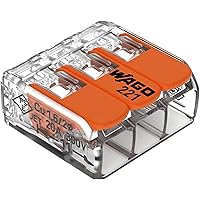
WAGO Verbindungsklemmen 221-413 | 3 Leiter, bis 4 mm², 50 Stück, COMPACT Kabelverbinder mit Hebel für alle Leiterarten weltweit, bestätigte Anwendungssicherheit
30% Off
Yankee Candle Duftkerze im Glas (groß) | Christmas Cookie | Kerze mit langer Brenndauer bis zu 150 Stunden | Perfekte Geschenke für Frauen
42% Off
Oma und Opa Geschenk personalisiert - Foto Geschenk Holzbild - Geschenke für Großeltern, Bester Opa, Schriftzughalter, Geschenk Oma & Opa, Geschenke für Großeltern, Oma & Opa Weihnachtsgeschenk
10,99 € (as of 2024-12-15 13:28 GMT +01:00 - More infoProduct prices and availability are accurate as of the date/time indicated and are subject to change. Any price and availability information displayed on [relevant Amazon Site(s), as applicable] at the time of purchase will apply to the purchase of this product.)
Mini Discokugel Licht,YIKANWEN Stimme Steuerung Disco Party Bühnenbeleuchtung Effektlicht DJ Stroboskop Kugel mit Spiegeln & Glitzereffekt für Parties Kinder Geburtstag Club
20% Off
Echo Dot (Neueste Generation) | Smarter WLAN- und Bluetooth-Lautsprecher mit Alexa und gigantischem, sattem Klang | Anthrazit
60% Off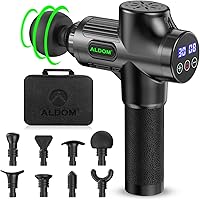
Massagepistole, ALDOM Massage Gun Massagegerät, Muskel Massage pistole mit 30 Geschwindigkeiten bis zu 4800U/min und 8 Massageköpfen, Elektrische Handmassagegeräte Geschenke für Männer Frauen
€59.99 (€59.99 / stück) (as of 2024-12-15 11:44 GMT +01:00 - More infoProduct prices and availability are accurate as of the date/time indicated and are subject to change. Any price and availability information displayed on [relevant Amazon Site(s), as applicable] at the time of purchase will apply to the purchase of this product.)
Emsa N20201 Travel Mug Classic Isolierbecher 0,36 Liter | neuer Komfort-Schraubverschluss | Edelstahl | 4h heiß und 8h kalt | 100% dicht | spülmaschinenfest | 360°-Trinköffnung | Edelstahl
40% Off
Die Antwort lautet NEIN
€1.99 (as of 2024-12-14 15:11 GMT +01:00 - More infoProduct prices and availability are accurate as of the date/time indicated and are subject to change. Any price and availability information displayed on [relevant Amazon Site(s), as applicable] at the time of purchase will apply to the purchase of this product.)